Recognise the no-go direction
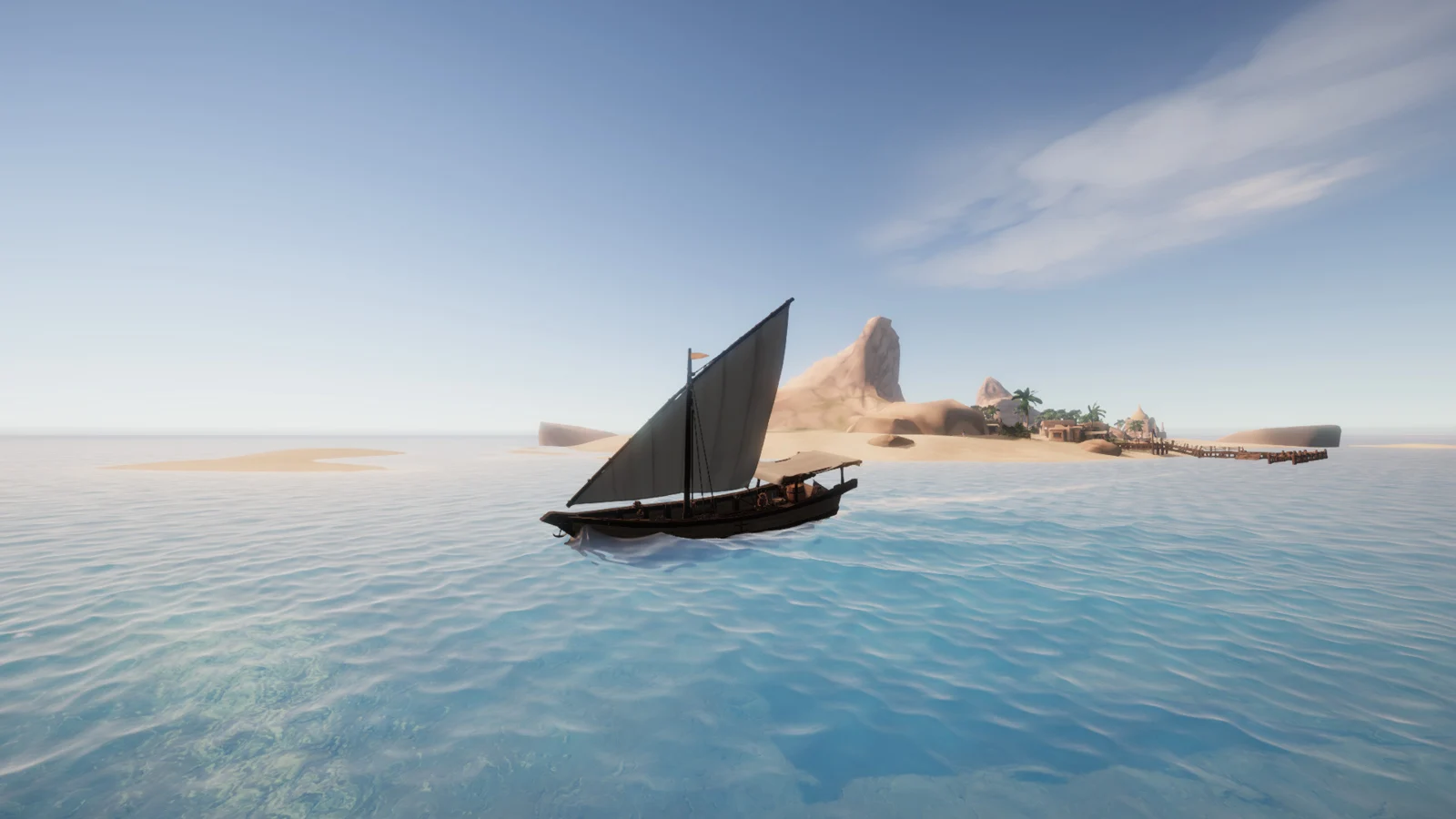
A destination directly ahead does not mean the boat can sail directly towards it. When the bow points into the wind, the sail can lose its useful shape and the boat loses drive. In Sailwind, this is a route problem rather than a reason to pull every line tight. Look at the wind indicator in relation to the boat, then compare your intended heading with the diagram in the in-game sailing manual. The direct map line and a sailable heading are not always the same thing.
Draw a pair of legs
An original planning sketch can show two angled legs on opposite sides of the desired route. The boat advances towards the destination by alternating between them. These lines illustrate the idea of tacking; they are not exact optimal angles for every hull and sail plan. Leave room to complete the turn, especially near land or other obstructions. A short demonstration in open local water is more manageable than first discovering the problem during an offshore delivery with an approaching deadline.
Move the sail to the new side
As the boat changes its relationship to the wind, the sail's working side changes too. Reassess the sheet rather than expecting the trim from the old heading to remain correct. Watch for the sail filling again after the turn. If the boat stalls, identify whether it is still pointing too close to the wind or has not yet regained enough movement. The lesson is the connection between course and sail trim, not a memorised wheel movement that ignores the weather.
Measure progress by the useful direction
A tacking leg can feel like moving away from the target because the bow is not pointing at it. Use the map and the larger route to judge whether the sequence is making progress. Do not mistake total distance travelled for distance gained towards the destination. A sensible log entry records the intended destination, wind relationship and reason for the change of heading. That explains why the route bends without pretending there is one universally fastest zigzag.